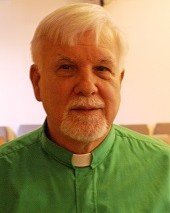
Here is a mission moment for the first Sunday of the Season of Creation at Ft. Lauderdale UCC
Trees:
The story of creation is not just about us humans. The Season of Creation tells the story of more than human life participation in the Creator’s Spirit in creation. This morning I tell the story of trees, who are among Earth’s oldest companions. They are faithful givers of life. With every breath, they take in carbon dioxide and offer back oxygen, so that we may live. They clean the air of poisons and soften the heat of summer, shading creatures great and small.
Through their roots, trees hold the soil in place, preventing the land from washing away. They catch the rain, slowing the floods, and allow water to seep into the ground, replenishing streams and rivers. Their bodies are homes — not just for birds and squirrels, but for insects, fungi, and countless unseen creatures.
Trees have a form of nonverbal language and express an altruism of care and compassion for life. But perhaps the most wondrous gift of trees is their generosity.
Underground, through networks of roots and fungi, trees share food and water. The strong support the weak, the old nourish the young, and together they create a community of resilience. Scientists call this the wood-wide web, but perhaps it is simply the wisdom of creation or the discipleship of trees, life supporting life.
In the intricate web of forest ecosystems, scientists have discovered that the largest and oldest trees, Mother Trees, who play a decisive role in sustaining life. These giants, with their vast canopies and deep roots, are more than individual organisms; they function as central hubs in a community of interdependent trees. Through underground networks of mycorrhizal fungi, Mother Trees connect to surrounding plants, facilitating the flow of nutrients, water, and even chemical signals. They embody an ecology of reciprocity and resilience.
Biologically, Mother Trees share carbon, nitrogen, and minerals with young seedlings, often favoring their own offspring but also extending generosity to other species. In this way, they act as guardians of biodiversity, ensuring that the next generation of the forest can survive even in shade or stress. They communicate to saplings and other trees when pests or drought threaten, they send out warning signals through fungal pathways, activating defense responses in neighboring trees. In death, their bodies return to the cycle as nurse logs, providing food and shelter for mosses, insects, fungi, and seedlings—a final gift of life. This is the language and lives of trees.
Trees are gardeners since they were birthed. When a giant tree falls, its body becomes a nurse log—dark bread for a hundred small lives. Moss and fungi prepare the cradle; seeds find a soft bed; roots learn to drink from the memory of fallen trees. Even in death, a tree midwifes new beginnings.
And when fire comes—sometimes terrible—trees keep preaching resurrection. Some cones wait years for the heat to open, flinging seed onto cleansed earth. Some trunks sprout green from hidden buds after the flames pass. Char and ash become the seedbed of renewal. The forest breathes out lament and breathes in hope, and teaches us that resurrection is not a denial of loss but a power of Spirit animating life.
But trees are faithful givers of life. With every breath we share, they take in carbon dioxide and offer back oxygen, so that we may live. We interbreather with trees, and all life interbreathes. Breath, ruah, appear nearly 400 times in the Hebrew scriptures. One fully grown tree can produce a large amount of oxygen over a year, sometimes cited as enough for a family of four or for 2-10 people annually, depending on the tree’s size.
Trees are gardeners beyond their own years. When a giant falls, its body becomes a nurse log—dark bread for a hundred small lives. Moss and fungi prepare the cradle; seeds find a soft bed; roots learn to drink from the memory of the fallen. Even in death, a tree midwifes new beginnings. This is Gospel in wood-grain: nothing is wasted in the economy of love.
And when fire comes—sometimes terrible for life, trees keep preaching resurrection. Some cones wait years for the heat to open, flinging seed onto cleansed earth. Some trunks sprout green from hidden buds after the flames pass. Char and ash become the seedbed of renewal. The forest breathes out lament and breathes in hope—teaching us that resurrection is not a denial of loss but a power of the Spirit that rises within it.
Scripture places a tree at the center of the story of Eden—the tree of life—its roots drinking the deep mystery of God, its branches blessing every creature with shade, fruit, and song. The tree of life is a sacrament of connection, binding soil and sky, creature and Creator.
But we also remember another tree: wood cut by the Romans destroyed to use the wood to male an instrument of death that bore the body of Christ. On that wood, God receives the world’s wounds—the groaning of creation, the cries of the poor, the thirst of forests, the grief of disappearing species. The cross is not a break in the story of life; it is the tree of life passing through suffering. Hold that for a moment: life that does not deny pain, but carries it in love.
The wood that bore Christ’s body is planted in the soil of the world. From that pierced trunk, sap rises again in Easter light in a grove of trees. The Risen One is the first fruit of a creation made whole, and we hear in today’s reading of Revelation whisper: the leaves of the tree are for the healing of the nations. Healing for peoples and pollinators, rivers and neighborhoods, bodies and biomes. So today, let the trees disciple us.
They teach us to root—deep in place, in prayer, in justice.
They teach us to reach—beyond ourselves toward light, toward God, toward one another.
They teach us to share—moving what we have to where it is needed.
They teach us to become a shelter and soil for generations we will never see.
They teach us to rise after fire—trusting that green life is already pushing from hidden places.
And take one slow breath in courage, to join the holy work of tending Earth’s garden—planting, protecting, restoring—so that, with the trees, we may become gardeners of life.
Christ, Tree of Life, root us in your cross and raise us in your resurrection.
Amen.